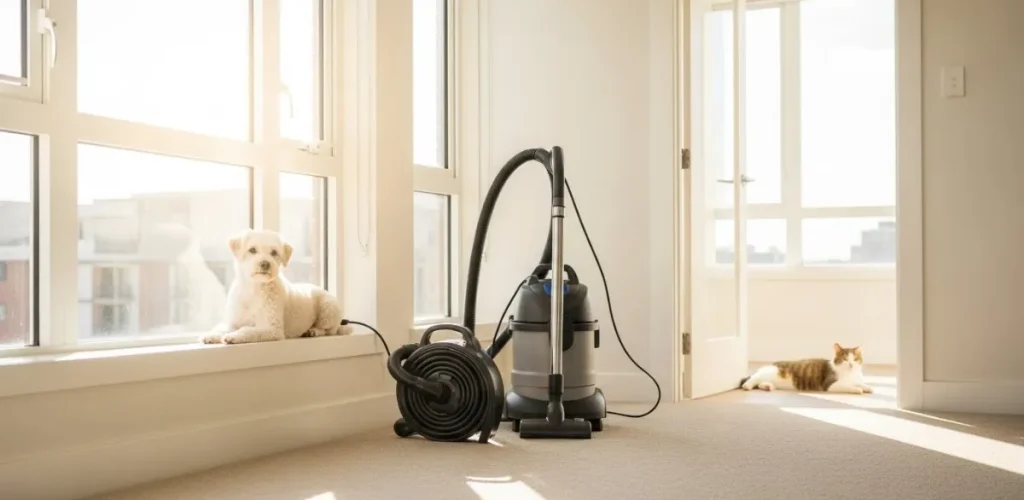
Moving out with a pet is a whole different game. You can scrub until the place shines, but miss one legal or pet-related detail and your bond can disappear fast. This happens more often than people realise—a property looks spotless, smells “fine,” and then the agent comes back with carpet issues, odours, or some mysterious “pet requirement” no one mentioned earlier.
That’s why this guide exists. Not to scare you — just to make sure you don’t get caught out by rules most renters aren’t told about. If you’ve got a dog, a cat, or anything with fur, here’s what actually matters in Melbourne.
The Legal Reality for Pet Owners in Victoria
Do you legally need professional cleaning?
Not automatically. Having a pet doesn’t mean you’re forced to book professional cleaners. Under Victorian law, you’re only responsible for returning the property to the same condition it was in when you moved in — minus fair wear and tear. Professional cleaning is only required when it’s needed to restore the original condition, not just because an agent prefers receipts.
Section 27C explained
Section 27C of the Residential Tenancies Act (Vic) says a renter can only be required to arrange professional cleaning if:
- It’s needed to return the property to its original condition, and
- The requirement is reasonable
In simple terms: no damage = no forced cleaning. If a landlord or agent can’t point to a real problem, that demand carries little weight, especially at VCAT.
Pet clauses in leases (post-March 2021)
If your lease was signed after March 2021 and includes a specific pet clause, you may be contractually required to provide:
- Professional carpet steam cleaning
- Deodorising (if stated)
- Sometimes, a flea treatment receipt
A vague line like “the property must be cleaned” doesn’t cut it. Always check the exact wording before spending money.
Why “pet bonds” are illegal in Victoria
There’s no legal pet bond. Landlords can’t charge extra just because you have a pet, and agents can’t hold more “just in case.” The standard bond already covers pet damage. If someone mentions a pet bond, they’re misinformed.
What VCAT actually enforces
VCAT cares about evidence, not opinions. What usually holds up: entry and exit reports, clear photos, receipts only when legally required, and proof of actual damage. Generic demands or assumptions won’t fly. If the place is genuinely clean and wear matches normal pet living, VCAT often sides with the renter.
The Flea Treatment Protocol Property Managers Expect
Many pet owners get tripped up here. You clean, steam, book a flea treatment—and agents sometimes still push back. Usually, it’s about timing, not effort.
When flea treatment is actually required
It’s not automatic. Usually expected when:
- Your lease mentions it
- You had a dog or cat indoors
- The property manager requires it as standard policy
If it’s in your lease, it’s usually better to follow through than argue.
The only correct order (clean → steam → spray)
Agents expect:
- Full end-of-lease clean
- Professional carpet steam cleaning
- Licensed flea treatment
Why steam cleaning before spraying invalidates treatment
Heat breaks down pesticides. Spray before steaming, and you undo the treatment. Flea treatment must be the final step.
What a valid flea certificate must include
- Licensed pest control company name & licence number
- Property address
- Date of treatment
- Clear mention of flea treatment
Without these, agents may reject the certificate.
Cleaning Areas Property Managers Inspect for Pet Damage
Agents don’t just glance around. They crouch. They sniff. Some use phone torches.
These are the areas they focus on.
Carpets & underlay (urine, hair, deodorising)
Agents look for:
- Dark patches or yellowing
- Matted fibres
- Lingering smells
Urine often sinks into the underlay, not just the carpet. Steam cleaning can freshen the surface, but it won’t always solve what’s underneath. That’s why deodorising or enzyme treatment matters.
Walls, skirting boards & corners
Pets leave oils on:
- Skirting boards
- Corners
- Door frames
From far away, the walls look fine. Up close, they don’t. This is one of the most common reasons agents claim cleaning wasn’t thorough.
Windows, glass doors & pet nose marks
Check the glass at the pet’s eye level:
- Sliding doors
- Balcony glass
- Low windows
Nose prints dry clear. Humans miss them. Agents don’t.
Pet sleeping and feeding areas
Agents always inspect:
- Around pet beds
- Under couches
- Feeding corners
These spots collect oils and smells over time and are often missed during DIY cleans.
Air vents and HVAC filters (often missed)
If your pet sheds, hair and dander collect in:
- Return air vents
- Ducted heating covers
A quick vacuum here shows attention to detail — and agents notice.
Pet Odours Explained (Why Smells Come Back After Cleaning)
Ever thought a place smelled fine, only for someone else to notice something later? There’s a reason.
Uric acid crystals and humidity
Pet urine leaves uric acid crystals that:
- Bond to carpet and underlay
- Reactivate with humidity
- Release odour weeks later
That’s why smells return after inspection.
Why standard cleaners fail
Most cleaners:
- Mask odours
- Clean the surface
- Smell good temporarily
They don’t break down uric acid. Once the fragrance fades, the smell returns.
Enzymatic cleaning vs steam cleaning
Steam cleaning lifts dirt.
Enzymatic cleaning destroys the odour source.
For pet urine, enzyme treatment is often the missing step.
When replacement beats cleaning
Sometimes cleaning isn’t enough.
If urine has soaked deeply or smells keep returning, replacing a small section of carpet or underlay is often cheaper — and far less stressful — than a bond dispute.
Pet Damage vs Fair Wear and Tear (Victoria Standards)
You’re responsible for damage, not normal pet wear.
Feature | Fair Wear & Tear | Pet Damage |
Carpets | Flattened walkways, general dullness | Urine stains, strong odours, chew marks |
Walls & doors | Light scuffs, minor marks | Deep scratches, bite damage |
Outdoor areas | Small yellow patches, soil compaction | Large holes, destroyed garden beds |
Odour complaints | Minor “lived-in” smell | Strong urine or wet-dog odours, documented |
VCAT looks at evidence, not assumptions. No proof often means no claim.
2026 Melbourne Pricing Guide for Pet-Related Extras
- Flea treatment: $150–$230
- Carpet deodorising: $40–$60
- Heavy pet hair removal: $50–$90
DIY works when there’s no urine damage and odours clear quickly. Once issues linger, professional help usually saves money and stress.
How to Pass Final Inspection with Pets (Checklist)
- Photograph: Carpets, skirting boards, glass at pet height, empty rooms
- Keep receipts: Steam cleaning, flea treatment, deodorising/enzyme treatment
- Challenge unfair claims: Ask for photos, specific issues, entry vs exit comparisons
- Involve Consumer Affairs Victoria: If bond release stalls or demands lack evidence
Get Ready to Clean
Cleaning your rental property thoroughly when moving out is essential to get your bond back. Pets mean extra attention in certain areas, but following the checklist above will help you stay on track. Understanding your lease and responsibilities makes the process smoother and helps maintain a good relationship with your landlord.
If cleaning feels overwhelming, PureNest Cleaning can handle all the pet-related areas professionally, giving you peace of mind and a stress-free move.